
Taking a proactive approach to home management is about more than just keeping up appearances. It is about protecting your financial investment, maintaining your home’s structural integrity, and saving yourself from the overwhelming stress of emergency repairs. When water, soil pressure, or utility failures strike, the damages quickly run into tens of thousands of dollars. By understanding how your property functions as an interconnected system—where your roof runoff affects your foundation, your yard grade impacts your septic system, and your soil stability dictates your driveway’s lifespan—you can catch small issues before they spiral into major emergencies.
This comprehensive guide breaks down the essential steps to fortifying your property from the subfloor to the front curb. By implementing these actionable strategies, you can keep your home safe, dry, and functional for decades to come.
Fortifying Your Foundation & Sub-Level Drainage

The space beneath your living area is the backbone of your home’s structural health. Groundwater is constantly in motion, and during heavy rainstorms or rapid snowmelts, hydrostatic pressure builds up against foundation walls and underneath concrete slabs. If that pressure has nowhere to go, water will find every microscopic fissure, expansion joint, or floor crack available.
Preventing subterranean water intrusion requires a dual-stage defense: directing water away from the exterior perimeter and efficiently evacuating any moisture that manages to penetrate your sub-level drainage systems.
Identifying Water Ingress Vulnerabilities
Before installing expensive equipment, you must identify how and where water threatens your foundation. Common red flags include:
-
Efflorescence: A white, powdery mineral deposit left behind on concrete or masonry walls as moisture evaporates.
-
Musty Odors: Persistent damp smells indicate active mold or mildew growth hidden behind finished drywall or inside floor joists.
-
Hairline Wall Cracks: Vertical or horizontal fissures in poured concrete or cinder blocks that widen during wet seasons.
-
Sump Pit Spikes: A sump pit that fills rapidly even during moderate rainfall, signaling a high water table around your footing drains.
Setting Up Bulletproof Evacuation Systems
Your mechanical sump pump is your foundation’s last line of defense. Relying on a single, aging unit powered solely by grid electricity is one of the biggest gambles a homeowner can make. During severe weather, power outages and heavy rainfall often occur simultaneously.
To build a truly resilient system, install a primary submersible pump paired with a secondary, battery-backup unit mounted slightly higher in the pit. Test the float switches quarterly by pouring a bucket of water directly into the basin. Additionally, clear out any gravel or debris that settles at the bottom, as small stones can easily jam the pump impeller.
When installing or upgrading these complex mechanical systems, partnering with experienced professional technicians ensures that discharge lines are sized correctly, check valves are positioned to prevent backflow, and electrical lines meet safety codes. Scheduling certified sump pump services guarantees that your mechanical setup can handle high-gallon-per-minute volumes during unexpected flash floods.
Furthermore, make sure your exterior discharge pipe carries water at least ten to fifteen feet away from your foundation. If water simply empties right next to your exterior wall, it will sink straight down into the backfill soil and re-enter your sump pit in a continuous, wear-inducing loop. For complex exterior drainage routing, relying on comprehensive sump pump services helps establish dedicated underground piping that carries water safely to a pop-up emitter or storm drain.
Managing Rural Water Systems & Well Infrastructure
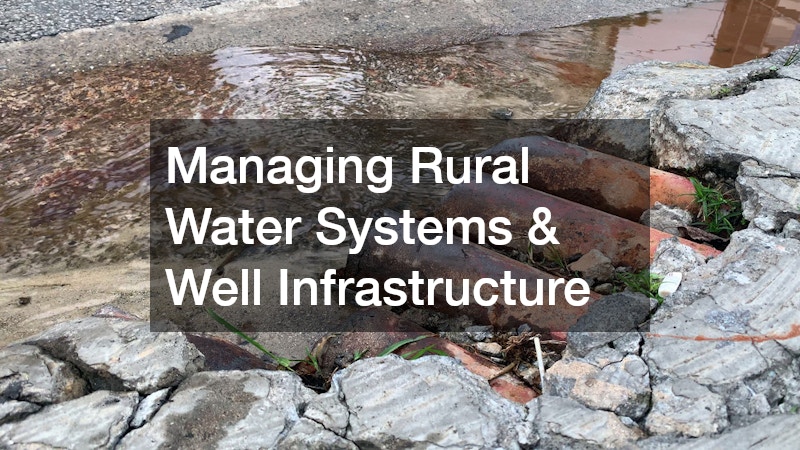
For homes relying on private wells, water security and property protection go hand in hand. Unlike municipal water systems maintained by local utilities, a private well makes you the sole manager of your water supply. A sudden system failure can leave your family without running water, burn out expensive pump motors, or cause hidden leaks that saturate your yard and damage surrounding structures.
Protecting your well system involves regular monitoring of mechanical components, maintaining clean groundwater conditions, and recognizing early signs of equipment fatigue.
Preventing Mechanical Burnout and Contamination
Your well pump operates under demanding conditions, pulling water from hundreds of feet underground into a pressurized tank. Over time, electrical contacts pit, pressure switches fall out of calibration, and check valves wear down.
Watch out for rapid cycling—when your pump turns on and off rapidly every time a faucet is opened. This usually indicates a waterlogged pressure tank where the internal bladder has failed. Ignoring rapid cycling will overheat the motor winding, leading to complete mechanical failure.
When mechanical issues arise, attempting DIY fixes on high-voltage electrical boxes or deep-well drop pipes can lead to costly mistakes or complete pump loss down the shaft. Engaging specialists for well pump repairs ensures that pressure switches are tuned properly, control boxes function smoothly, and system pressure remains balanced.
It is equally vital to protect the physical environment around your wellhead. Keep pesticides, fertilizers, and pet waste at least 100 feet away from the casing. Ensure the well cap sits at least 12 inches above the ground level, sloping the surrounding soil away from the pipe to prevent contaminated surface runoff from trickling down the outside of the casing.
If you notice sputtering faucets, cloudy water, or unusual noises coming from your pressure tank, seek immediate assistance. Scheduling prompt local well pump repairs prevents minor electrical or plumbing glitches from developing into severe supply disruptions or complete water loss.
Protecting Waste Lines & Underground Septic Systems
A sewage backup is arguably the most destructive, hazardous, and expensive disaster a homeowner can experience. Whether your home connects to a municipal sewer main or utilizes an on-site septic tank and drain field, underground waste lines require careful monitoring and respectful usage habits.
Because waste infrastructure is buried out of sight, problems often develop quietly over several years before manifesting as a slow drain, foul outdoor odor, or an indoor backup.
Maintaining Healthy Septic Operations
A residential septic system is a delicate biological ecosystem. Solids settle to the bottom as sludge, oils float to the top as scum, and treated liquid effluent flows out into the drain field. Disrupting this process causes untreated solids to clog the soil pipes in your leach field, leading to complete system failure.
To keep your septic system functioning smoothly:
-
Mind What You Flush: Never flush wipes (even those labeled flushable), paper towels, feminine hygiene products, grease, or harsh household chemicals that kill beneficial tank bacteria.
-
Stagger Water Usage: Running multiple loads of laundry while running the dishwasher overloads the septic tank with water, churning up solids and washing them straight into the leach field.
-
Protect the Drain Field: Never park vehicles, construct sheds, or plant deep-rooted trees over your drain field. Weight compacts the soil and crushes pipes, while roots invade joint seals.
-
Pump Periodically: Have your tank inspected and pumped every three to five years depending on household size.
Routinely booking professional septic tank services ensures that sludge accumulation levels are monitored, baffles are inspected for structural integrity, and potential drain field blockages are caught early.
Safe Excavation Near Underground Lines
When utility repairs, root removals, or pipe replacements become necessary around underground waste or water lines, traditional heavy digging equipment poses a severe risk. Striking a buried line with a backhoe bucket can cause instant environmental contamination and thousands of dollars in utility damages.
To mitigate this risk, modern contractors utilize non-destructive digging methods. Utilizing a specialized hydro excavation service allows technicians to blast away tough soil using pressurized water while simultaneously vacuuming up the slurry. This precise technique exposes delicate sewer pipes, gas lines, and electrical conduits safely without damaging the underlying utility infrastructure.
Tackling Major Earthmoving & Land Regrading

The shape and slope of your yard determine how water interacts with your property. Poor land grading is the primary root cause of waterlogged lawns, flooded basements, and soil erosion around foundations. If your yard slopes toward your house rather than away from it, every rainstorm channels hundreds of gallons of surface water directly against your home’s perimeter.
Correcting major grading issues involves manipulating soil levels, digging swales, or constructing retaining structures to establish proper drainage flow.
The Rules of Effective Yard Regrading
To keep your yard and foundation safe from standing water, follow these fundamental earthmoving principles:
-
Maintain the 10-Foot Slope Rule: The ground immediately surrounding your foundation should slope downward at least six inches over the first ten feet away from the home.
-
Construct Grass Swales: On steep lots, carve out broad, shallow grassy channels (swales) that catch surface water and route it around the house toward a safe outlet or rain garden.
-
Install French Drains for Soggy Lawns: In low-lying, flat areas where water naturally pools, dig a trench fitted with perforated pipe, wrapped in geotextile fabric, and backfilled with coarse gravel to absorb sub-surface saturation.
-
Protect Tree Root Systems: When shifting large amounts of earth, avoid burying the root flares of mature trees, which causes root rot and creates hazardous falling tree risks during future storms.
Choosing Between DIY and Professional Heavy Equipment
For minor topsoil smoothing, a wheelbarrow, shovel, and steel rake are sufficient. However, when moving tons of heavy clay, cutting deep drainage channels, or clearing large boulders, manual labor becomes impractical.
For medium-sized projects, renting compact machinery allows skilled DIYers to accomplish massive amounts of work quickly. Securing a temporary excavator rental gives you the power needed to dig precise trenches, clear stubborn stumps, and grade swales efficiently without breaking your back.
For complex, large-scale slope redesigns or major site prep adjacent to structural footings, hiring experienced local excavation contractors is the smartest move. Professional operators carry comprehensive liability insurance, understand local soil stabilization requirements, and possess the technical skill to establish precise laser-guided grades across your entire acreage.
Upgrading Surface Drainage & Asphalt Driveways
Your driveway is often the largest impermeable surface on your property. Because it cannot absorb water, a driveway acts as a high-velocity watershed during heavy rains. If poorly designed or neglected, driveway runoff can erode surrounding lawn soil, wash out retaining walls, or channel water directly toward your garage door and home entryway.
Furthermore, neglected driveways quickly succumb to water intrusion. When water seeps into tiny surface cracks and freezes during winter, it expands, causing alligator cracking, deep potholes, and complete sub-base failure.
Protecting Your Pavement Investment
Maintaining an asphalt or concrete driveway requires a combination of routine surface maintenance and structural water management.
To extend the lifespan of your driving surface:
-
Fill Cracks Promptly: Apply rubberized crack filler to any opening wider than an eighth of an inch to stop water from reaching the gravel sub-base.
-
Keep Shoulders Supported: Ensure the soil or gravel along the edges of your driveway is flush with the pavement. Unsupported asphalt edges crumble easily when driven over by heavy vehicles.
-
Divert Upstream Water: Install channel drains (trench drains) across the front of garage doors or across steep driveways to intercept flowing water before it pooling against structures.
-
Apply Quality Sealcoating: Apply an asphalt sealer every two to three years to protect the petroleum binder from UV degradation, oil spills, and water penetration.
When to Bring in Paving Professionals
When a driveway develops widespread structural failure, deep rutting, or severe drainage issues, simple surface patches will no longer hold up.
Consulting with experts in driveway paving services allows you to evaluate whether your pavement requires a simple overlay or a complete tear-out and sub-base reconstruction. Proper compaction of the underlying aggregate layer is critical; without a rock-solid foundation, even brand-new asphalt will crack under vehicle weight within a few seasons.
When hiring an asphalt paving contractor, confirm that they use heavy power rollers for maximum density, establish a minimum two-inch compacted asphalt depth for residential use, and pitch the final surface at least one to two percent to guarantee rapid water shed.
Protecting Your Investment for the Long Haul

Preventing costly basement and yard disasters comes down to consistent observation, timely maintenance, and addressing small vulnerabilities before they turn into major structural failures. Your home is a complex ecosystem where water, soil, mechanical systems, and structural materials interact every single day.
By keeping surface water moving away from your walls, maintaining your subterranean drainage pumps, managing your private well and septic utilities responsibly, and keeping outdoor paving in top shape, you build a resilient home capable of withstanding extreme weather.
Take the time to walk your property once a season. Look closely at your drainage patterns during a heavy rainstorm, listen to how your mechanical pumps run, and address minor maintenance items right away. The effort and resources you invest in preventive care today will pay off exponentially in home longevity, safety, and peace of mind for years to come.